
When you picture Army training, it’s easy to focus on physical demands—long runs, push-ups, and strength drills.
But what often gets overlooked is the equally rigorous mental training that soldiers undergo to prepare for high-stakes situations.
The U.S. Army’s Holistic Health and Fitness (H2F) system emphasizes five domains of readiness: physical, nutritional, spiritual, sleep, and mental.
It’s that last one—mental readiness—that lays the foundation for staying calm under pressure, adapting quickly, and performing with clarity.
Army mental readiness experts describe it as the ability to sustain focus, regulate emotions, and operate effectively, even when conditions are unpredictable or high-stress.
In a world where many of us face our own versions of chaos—job interviews, public speaking, conflict resolution, caregiving—the same mental tools used by soldiers can help anyone navigate life with greater composure and confidence.
The first strategy is visualization.
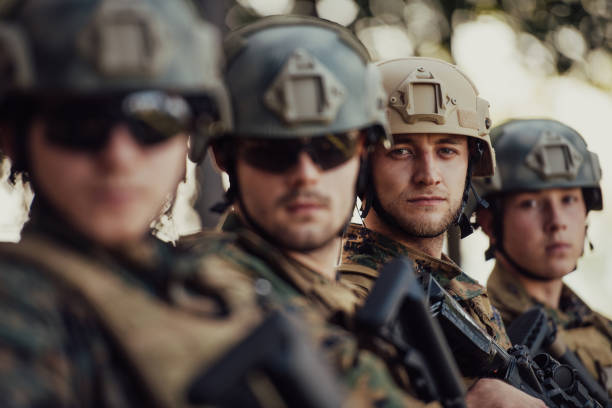
Used by athletes, soldiers, and performers alike, visualization helps you mentally rehearse the details of a difficult task before it begins.
Major Erin Stone, an occupational therapist and Army mental readiness expert, explains that this kind of mental repetition conditions the nervous system to respond with more familiarity and less anxiety.
In a Army health professionals guide viewers through performance visualization, a technique that not only improves readiness but also enhances confidence and emotional control.
The second strategy is identifying your optimal performance zone.
This involves learning how to either energize or calm yourself, depending on what the situation calls for.
Army mental readiness coaches help soldiers reflect on their internal states before and after challenges to recognize patterns—when they felt over-activated, under-energized, or in the ideal mental state for execution.
You can develop personalized tools like breathing routines, music cues, or power statements that help you enter that ideal state on demand.
The third strategy is integrating daily mental practice.
Just like physical strength, mental resilience is built through repetition.
The Army teaches structured breathing techniques such as box breathing and the physiological sigh to help reset the nervous system in real time.
These methods have even been supported by neuroscientific research, with Stanford neuroscientist Dr. Andrew Huberman explaining the impact of breathing techniques on stress reduction and brain function.
Another tool is reflection journaling, a simple habit where you write down three things you did well and one area to improve after a challenging activity.
This keeps your focus on progress and encourages a growth mindset, which is critical in building long-term resilience.
Together, these methods create the conditions for mental agility, emotional regulation, and focused performance—even when things don’t go according to plan.
That’s why the Army doesn’t treat mental readiness as optional.
It’s integrated into every level of training because it affects every area of life, from decision-making to teamwork.
And it’s equally useful whether you’re in uniform or navigating a high-pressure moment in everyday life.
Mental strength is not a fixed trait—it’s a skill.
With just a few intentional habits, anyone can build it.
And once you do, it becomes a force multiplier across everything you do.