
What’s an Ectomorph? Are Body Types Even Real?
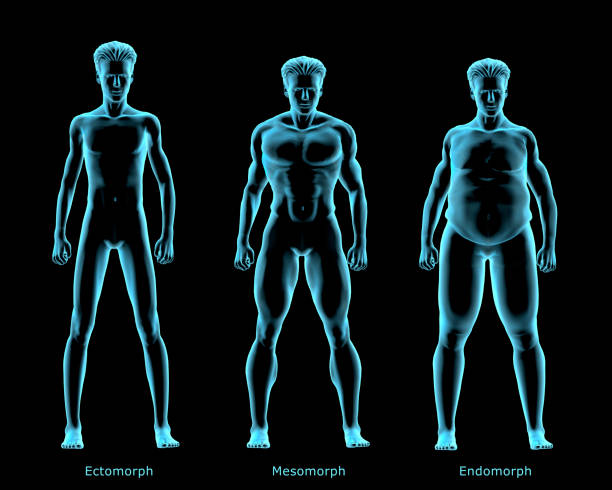
The idea of being an “ectomorph” dates back to the 1940s, when psychologist William Sheldon proposed that body types—ectomorph, mesomorph, and endomorph—could predict personality traits and physical abilities.
Though modern science has largely moved past these outdated ideas, the term “ectomorph” still gets used today to describe naturally slim people who struggle to gain weight or build muscle easily.
For those who identify as ectomorphs, this label can feel either helpful or limiting.
On one hand, it offers a sense of clarity.
If you’re tall, lean, and find it hard to put on weight no matter how much you eat, you might see yourself in this definition.
But on the other hand, it can give the false impression that your genetics entirely dictate your outcomes, especially when it comes to fitness or health.
That simply isn’t true.
Scientific research confirms that while body composition is influenced by factors like bone structure, metabolism, and fat distribution, none of these traits are fixed in stone.
For example, a 2020 review published in Frontiers in Physiology shows that muscle hypertrophy—muscle growth—is possible in all individuals when consistent resistance training is applied, regardless of starting body type.
That means ectomorphs can absolutely gain muscle and strength with the right training, recovery, and nutrition strategies.
The myth that ectomorphs “can’t” bulk up is just that—a myth.
However, ectomorphs may need to approach their goals differently.
Because we tend to have faster metabolisms and smaller appetites, it can take more conscious effort to eat enough calories and protein to support muscle growth.
This doesn’t mean overhauling your life or force-feeding yourself.
It means building habits that make calorie-dense, nutritious foods easier to include in your day.
Think smoothies with oats and peanut butter, or meals with rice, avocado, and eggs.
A well-designed workout program also matters.
Rather than ultra-high volume or constant cardio, most ectomorphs do better with progressive strength training that allows for recovery and focuses on compound lifts like squats, deadlifts, and chin-ups.
There’s also the question of how we define “body types” in the first place.
While ectomorph, mesomorph, and endomorph remain common in popular fitness culture, explains how these categories lack strong scientific backing and are rarely used by exercise physiologists today.
Instead, professionals often focus on measurable traits like limb length, muscle fiber composition, and metabolic rate—factors that vary from person to person and don’t always fit neatly into a single label.
It’s worth noting that even elite athletes vary widely in body shape and size.
A study in Journal of Sports Sciences found that Olympic-level performance exists across a spectrum of body types,
Which suggests there is no ideal frame—only an ideal approach for your frame.
So, is “ectomorph” a real body type?
Not really, at least not in a clinical or scientific sense.
But it can still be a useful shorthand for recognizing your own tendencies—and for creating a plan that works with your physiology rather than against it.
You don’t need to change your body type.
You just need to understand it well enough to train and nourish it with purpose.
And when you do, your body will adapt—no matter what label you give it.